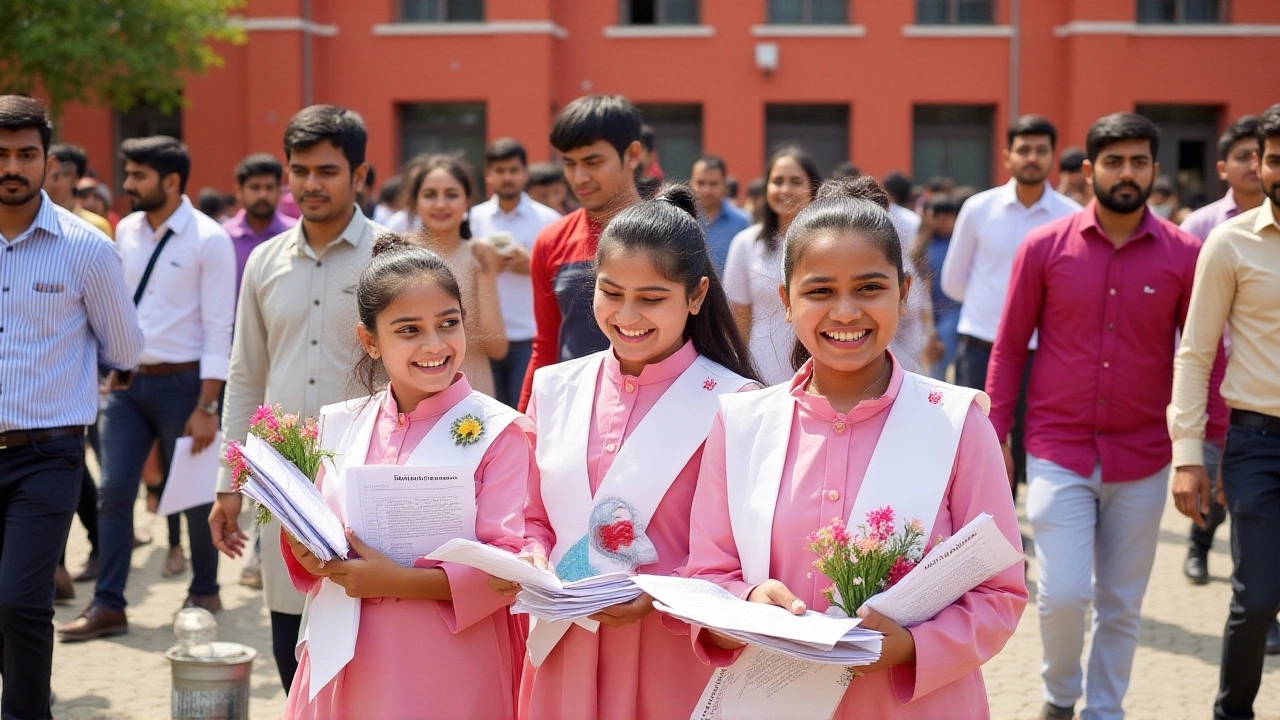
When Board of High School and Intermediate Education, Uttar Pradesh (UPMSP) announced the Class 10 and 12 board exam results on April 23, 2026, at 4:00 PM from its headquarters in Prayagraj, it didn't just drop a digital link. It handed millions of students a lifeline that doesn't require Wi-Fi.
Here's the thing: while urban centers buzzed with high-speed connectivity, students in remote districts of Uttar Pradesh often face spotty networks or no internet access at all. The twist is that UPMSP has made it possible to get your complete result status—pass or fail—using just a simple SMS. No data plan needed. Just a basic mobile connection.
The Offline Lifeline: How SMS Results Work
For families living in areas where loading a webpage feels like an eternity, this feature is a game-changer. According to reports from Prabhat Khabar and educational platforms like Testbook, the process is straightforward but demands precision. You don't need to navigate complex portals or wait for servers to stabilize.
To check your result, open your phone's message app. For Class 10 students, type "UP10 [space] Roll Number". For Class 12 candidates, it's "UP12 [space] Roll Number". Send this text to the designated number 56263. Within moments, you'll receive an SMS confirming your result status.
But wait—there's a catch. The format matters immensely. If you miss the space between the code and your roll number, or if you enter a digit incorrectly, the system won't recognize the query. As one student noted after a failed attempt, "It’s easy until you realize one wrong zero means starting over." Also, ensure your prepaid plan includes outgoing SMS credits; without them, the message won't send.
Why This Matters Beyond Connectivity
Server crashes are common during result declarations. When millions hit the official portal simultaneously, websites often freeze. In those chaotic moments, panic sets in. Parents worry. Students stress. The SMS option acts as a reliable backup channel, decoupling result access from web infrastructure reliability.
This isn't new territory for UPMSP. Similar SMS services were utilized during the 2024 exams, proving their efficacy when digital channels buckled under load. By maintaining this parallel system, the board acknowledges that equitable access to information requires more than just putting data online—it means ensuring everyone can reach it, regardless of their device or location.
Digital Alternatives: DigiLocker and Official Portals
If you do have internet access, there are richer options available. The official UPMSP website allows students to view detailed mark sheets by entering their 9-digit roll number. But the real power lies in integration with national digital platforms.
DigiLocker has become the go-to for secure, verifiable digital documents. To retrieve your mark sheet here, log in via Aadhaar or mobile number, select 'Education,' choose UPMSP, and pick either Class 10th or 12th Marksheet. Enter your roll number and passing year (2026), and boom—you’ve got a legally valid PDF copy instantly. This document carries the same weight as a physical certificate, useful for college admissions or job applications.
The UMANG app offers another layer of accessibility, consolidating government services into one interface. Meanwhile, third-party apps like "UP Result 2026" on Google Play provide simplified interfaces for quick checks, pulling data directly from official sources. These tools complement rather than replace the SMS method, offering depth where speed suffices elsewhere.
What Experts Are Saying
Educational analysts point out that multi-channel dissemination reduces anxiety and misinformation. "When only one channel exists, failure becomes catastrophic," says Dr. Anil Sharma, an education policy researcher based in Lucknow. "By providing SMS, web, and app-based access, UPMSP creates redundancy that protects student interests during peak traffic periods."
However, challenges remain. Network delays can sometimes slow down SMS responses, leading to confusion. In such cases, experts advise switching to alternative methods rather than resending messages repeatedly, which may incur additional charges or clutter inboxes.
Looking Ahead: Streamlining Student Services
UPMSP continues to digitize ancillary services too. Corrections in mark sheets, certificate issuance, and grievance redressal are now handled through unified online platforms. This holistic approach aims to reduce bureaucratic friction and empower students with self-service capabilities.
As technology evolves, so will these systems. Future iterations might include voice-based queries for visually impaired users or AI-driven chatbots for instant support. For now, though, the humble SMS remains a testament to inclusive design—proving that sometimes, the simplest solution is the most effective.
Frequently Asked Questions
Can I get my full marks via SMS?
No, the SMS service primarily confirms whether you passed or failed along with aggregate percentage details. For subject-wise breakdowns and official certified copies, use the UPMSP website or download your mark sheet from DigiLocker using your Aadhaar-linked account.
Is the SMS service free?
While the service itself is free, standard SMS rates apply depending on your mobile operator. Ensure your SIM has active outgoing SMS credit before sending the query to avoid delivery failures due to insufficient balance.
What should I do if the SMS doesn't arrive?
First, verify your entered format and roll number accuracy. If issues persist, try again after 10 minutes as network congestion may cause delays. Alternatively, visit the official UPMSP portal or check DigiLocker for immediate access to your results without relying on cellular networks.
Are DigiLocker mark sheets legally valid?
Yes, mark sheets downloaded from DigiLocker carry legal validity equivalent to original physical certificates issued by UPMSP. They include digital signatures and QR codes for verification, making them acceptable for higher education admissions and employment purposes across India.